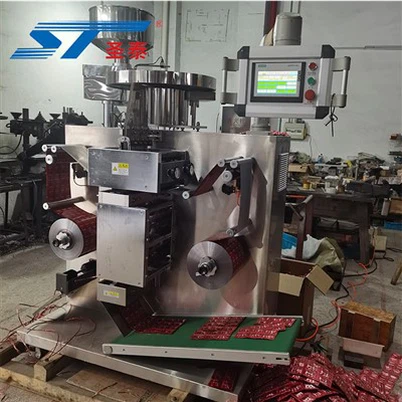
What are the common problems with a blister packing machine for vial and how to solve them?
Leave a message

Blister packing machines for vials are essential equipment in the pharmaceutical and medical industries, ensuring the safe and efficient packaging of vials. However, like any complex machinery, they can encounter various problems during operation. As a supplier of Blister Packing Machines for Vials, I have extensive experience in dealing with these issues. In this blog, I will discuss some common problems with blister packing machines for vials and provide practical solutions.
1. Sealing Issues
Incomplete Sealing
One of the most common problems is incomplete sealing of the blister packs. This can lead to product contamination, reduced shelf - life, and non - compliance with quality standards.
Causes:
- Incorrect temperature settings: If the sealing temperature is too low, the sealing film may not bond properly to the blister base.
- Insufficient pressure: The sealing pressure may not be evenly distributed or may be too low to create a proper seal.
- Worn - out sealing tools: Over time, the sealing dies or rollers can wear out, resulting in uneven sealing.
Solutions:
- Adjust the temperature: Check the machine's manual to determine the appropriate sealing temperature for the specific materials being used. Make small adjustments and test the seals until the desired result is achieved.
- Check and adjust the pressure: Use a pressure gauge to ensure that the sealing pressure is within the recommended range. If necessary, adjust the pressure settings on the machine.
- Replace worn - out parts: Regularly inspect the sealing tools and replace any worn - out components. This will help maintain consistent sealing quality.
Excessive Sealing
On the other hand, excessive sealing can also be a problem. It may cause the blister to break, damage the vial inside, or result in an aesthetically unappealing package.
Causes:
- High temperature: An overly high sealing temperature can melt the materials too much, leading to excessive sealing.
- Excessive pressure: Applying too much pressure during sealing can cause the blister to deform or break.
Solutions:
- Lower the temperature: Reduce the sealing temperature gradually and test the seals. Find the optimal temperature that provides a good seal without causing damage.
- Decrease the pressure: Adjust the pressure settings to a lower level. Make sure to test the seals to ensure that they are still secure.
2. Blister Forming Problems
Uneven Blister Depth
Uneven blister depth can cause issues with vial placement and sealing. Vials may not fit properly in the blisters, or the sealing may be compromised.
Causes:
- Uneven heating of the blister film: If the heating elements are not working evenly, the blister film will not soften uniformly, resulting in uneven blister depth.
- Worn - out forming tools: The forming dies or molds can wear out over time, causing variations in blister depth.
- Incorrect film tension: Improper film tension can affect the way the film is drawn into the forming cavities, leading to uneven blister depth.
Solutions:
- Check and calibrate the heating elements: Inspect the heating elements for any signs of damage or malfunction. Use a temperature sensor to ensure that the heating is uniform across the blister film.
- Replace worn - out forming tools: Regularly examine the forming dies and replace them if they show signs of wear. This will help maintain consistent blister depth.
- Adjust the film tension: Use the tension control mechanisms on the machine to adjust the film tension. Make sure that the film is fed smoothly into the forming station.
Blister Tears or Holes
Blister tears or holes can occur during the forming process, which can compromise the integrity of the package.
Causes:
- Sharp edges on the forming tools: Any sharp edges on the forming dies or molds can cut or puncture the blister film.
- High forming speed: Running the machine at too high a speed can put excessive stress on the blister film, causing tears or holes.
- Poor - quality blister film: Using low - quality blister film can increase the likelihood of tears and holes.
Solutions:


- Smooth the forming tools: Use a fine - grit sandpaper to smooth any sharp edges on the forming dies or molds. This will prevent the film from being cut.
- Reduce the forming speed: Slow down the machine to a more appropriate speed. This will give the blister film enough time to form properly without being damaged.
- Use high - quality blister film: Invest in high - quality blister film that is less likely to tear or develop holes. Consider the specific requirements of your application when selecting the film.
3. Vial Placement Issues
Misaligned Vials
Misaligned vials can cause problems during sealing and packaging. They may not fit properly in the blisters, or the package may not be aesthetically pleasing.
Causes:
- Faulty vial feeding system: The vial feeding mechanism may not be functioning correctly, leading to misaligned vials.
- Worn - out guides or tracks: The guides or tracks that direct the vials into the blisters can wear out, causing vials to deviate from their intended path.
- Incorrect machine settings: The machine settings for vial placement, such as the pitch or timing, may be incorrect.
Solutions:
- Check and repair the vial feeding system: Inspect the vial feeding mechanism for any blockages, misalignments, or mechanical failures. Clean or repair the system as needed.
- Replace worn - out guides or tracks: Regularly examine the guides and tracks and replace any worn - out components. This will ensure that the vials are properly guided into the blisters.
- Adjust the machine settings: Refer to the machine's manual to adjust the vial placement settings. Make small adjustments and test the vial placement until it is correct.
Vial Jams
Vial jams can disrupt the packaging process and cause downtime.
Causes:
- Overloading the vial feeding system: Feeding too many vials at once can cause jams in the feeding mechanism.
- Irregularly shaped vials: Vials with irregular shapes or sizes may not feed smoothly through the system, leading to jams.
- Foreign objects in the vial path: Any foreign objects in the vial feeding path can block the vials and cause jams.
Solutions:
- Control the vial feeding rate: Adjust the vial feeding rate to ensure that the system is not overloaded. This will help prevent jams.
- Screen vials for irregularities: Before feeding the vials into the machine, inspect them for any irregular shapes or sizes. Remove any defective vials.
- Clean the vial path: Regularly clean the vial feeding path to remove any foreign objects. This will keep the vials flowing smoothly.
4. Machine Maintenance and Upkeep
Lack of Lubrication
Proper lubrication is essential for the smooth operation of a blister packing machine. Lack of lubrication can cause increased friction, wear and tear on components, and even machine breakdowns.
Causes:
- Infrequent lubrication: Operators may forget to lubricate the machine regularly.
- Using the wrong lubricant: Using the wrong type of lubricant can lead to poor performance and damage to the machine.
Solutions:
- Establish a lubrication schedule: Create a regular lubrication schedule and ensure that operators follow it. This will help maintain the machine's performance.
- Use the correct lubricant: Refer to the machine's manual to determine the appropriate lubricant for each component. Use only high - quality lubricants that are recommended by the manufacturer.
Electrical and Control System Problems
Electrical and control system problems can cause the machine to malfunction or stop working altogether.
Causes:
- Loose connections: Over time, electrical connections can become loose, leading to intermittent power supply or control issues.
- Faulty sensors or switches: Sensors and switches are crucial for the proper operation of the machine. If they malfunction, the machine may not function correctly.
- Software glitches: The machine's control software may experience glitches or bugs, causing incorrect operation.
Solutions:
- Check and tighten connections: Regularly inspect the electrical connections and tighten any loose ones. This will help ensure a stable power supply.
- Replace faulty sensors or switches: If a sensor or switch is found to be faulty, replace it immediately. This will restore the machine's normal operation.
- Update the software: Keep the machine's control software up - to - date. Check the manufacturer's website for software updates and install them as recommended.
As a supplier of Blister Packing Machines for Vials, we understand the importance of providing reliable and efficient equipment. We offer a range of high - quality machines, including Blister Tablet Forming Sealing and Packing Machine, Pharmaceutical Blister Packing Machine, and Powder Blister Packaging Machine. If you are experiencing any problems with your blister packing machine or are considering purchasing a new one, we are here to help. Contact us to discuss your specific requirements and explore how our machines can meet your needs.
References
- Manufacturer's manuals for blister packing machines
- Industry standards and guidelines for pharmaceutical packaging
- Technical papers on blister packing technology