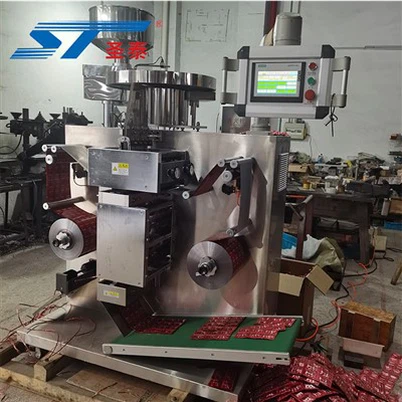
What is the automation level of a Manual Blister Packing Machine?
Leave a message

Hey there! As a supplier of Manual Blister Packing Machines, I often get asked about the automation level of these machines. So, let's dive right in and break it down.
First off, what exactly is a Manual Blister Packing Machine? Well, it's a piece of equipment used to create blister packs, which are those plastic packages you see a lot, especially for things like pills, small hardware, and other small items. The "manual" part means that it requires some human intervention in the packing process.
Now, when we talk about the automation level of a Manual Blister Packing Machine, it's important to understand that it's not fully automated like some of the high - tech industrial machines out there. But that doesn't mean it's completely useless or outdated. In fact, there are some real advantages to having a machine with a lower automation level.
The Basics of Manual Blister Packing
Let's start with how a manual blister packing machine works. The operator has to place the product into the pre - formed blisters manually. This could be a pill, a small toy, or any other item that needs to be packed. After placing the product, the operator then positions the lidding foil over the blisters and uses the machine to seal them.
The sealing process usually involves applying heat and pressure to bond the lidding foil to the blister. Some manual machines have a simple lever or pedal system that the operator uses to activate the sealing mechanism. It's a hands - on process, and the operator has a lot of control over each step.
Automation Features in Manual Blister Packing Machines
Even though it's called a "manual" machine, there are still some automation features. For example, most manual blister packing machines have a basic temperature control system. This ensures that the heat applied during the sealing process is consistent, which is crucial for a good seal. If the temperature is too low, the seal might not be strong enough, and if it's too high, it could damage the product or the packaging.
Another feature is the pressure control. The machine is designed to apply a certain amount of pressure during sealing to make sure the lidding foil adheres properly to the blister. Some machines also have a timer function, which helps the operator know how long to apply the heat and pressure for an optimal seal.
Advantages of Low Automation Level
One of the biggest advantages of a Manual Blister Packing Machine is its flexibility. Since the operator is involved in every step, it's easy to make adjustments on the fly. For example, if you're packing different sized products, you can quickly adapt the machine to accommodate them. You don't have to worry about reprogramming a complex automated system.
It's also a more cost - effective option for small businesses or those with low - volume production needs. Buying a fully automated blister packing machine can be really expensive, and you might not need all the fancy features if you're only packing a few hundred products a day. A manual machine allows you to get started with a relatively small investment.
Limitations of Low Automation Level
Of course, there are some limitations to the low automation level of a Manual Blister Packing Machine. The biggest one is the speed. Since the operator has to do a lot of the work by hand, the production rate is much lower compared to fully automated machines. If you have a large - scale production order, a manual machine might not be able to keep up.
Another limitation is the potential for human error. Even with the best training, there's always a chance that the operator might make a mistake, like misplacing a product or not applying the right amount of heat or pressure during sealing. This can lead to defective products and wasted materials.


Comparing with Other Blister Packing Machines
If you're considering a blister packing machine, it's worth comparing the Manual Blister Packing Machine with other types. For example, the Pharmaceutical Blister Packing Machine is often more automated and is specifically designed for the pharmaceutical industry. It has strict quality control and safety features to ensure the integrity of the medicine being packed.
The Small Capsule Blister Packaging Machine is also more specialized. It's optimized for packing small capsules, and it might have more advanced features to handle the delicate nature of these products.
And then there's the Smaller Blister Packing Machine, which can be either manual or semi - automated. It's a good option for those who need to pack very small items in small quantities.
Who Should Consider a Manual Blister Packing Machine?
A Manual Blister Packing Machine is a great choice for small businesses, startups, or those who are just testing the market. If you're not sure how much demand there will be for your product, starting with a manual machine allows you to keep your costs down and still produce high - quality blister packs.
It's also a good option for custom or specialty products. If you're packing unique items that require a lot of attention to detail, the hands - on nature of a manual machine gives you the control you need.
Contact for Purchase and洽谈
If you're interested in learning more about our Manual Blister Packing Machines or have any questions about the automation level or how it can fit into your production process, don't hesitate to reach out. We're here to help you make the right choice for your business. Whether you're a small startup or an established company looking for a more flexible packing solution, our machines could be the perfect fit.
References
- Packaging Machinery Manufacturers Institute. (2023). Basics of Blister Packing.
- Smith, J. (2022). The Future of Blister Packing Technology. Journal of Packaging Innovation.