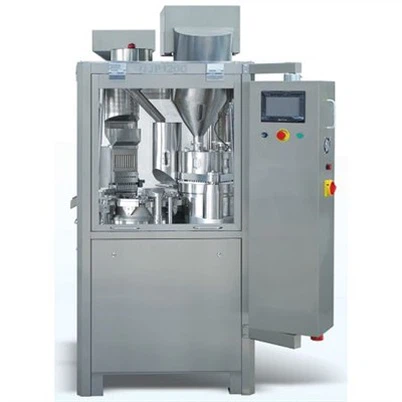
What is the filling performance of a hard capsule filling machine in high - altitude areas?
Leave a message

As a seasoned provider of hard capsule filling machines, I've encountered numerous inquiries regarding the performance of our equipment, especially in unique environmental conditions. One question that frequently arises is about the filling performance of a hard capsule filling machine in high - altitude areas. In this blog, I'll delve into the factors that affect the filling performance at high altitudes and how our machines can adapt to these conditions.
Understanding High - Altitude Conditions
High - altitude areas are characterized by lower atmospheric pressure and lower oxygen levels compared to sea - level regions. Atmospheric pressure decreases with increasing altitude, and this change can have a significant impact on the operation of a hard capsule filling machine.
Atmospheric pressure plays a crucial role in the filling process. For instance, in the capsule separation step, the pressure difference is often used to open the capsules. A lower atmospheric pressure at high altitudes means that the pressure differentials that the machine relies on may be affected. Additionally, the lower oxygen levels can cause changes in the physical properties of the filling materials, such as powders or granules.
Impact on Capsule Separation
The first step in the capsule filling process is capsule separation, where the two halves of the hard capsules are pulled apart. Our machines typically use a combination of mechanical and pneumatic systems to achieve this. At high altitudes, the reduced atmospheric pressure can make it more difficult to create the necessary pressure differentials for efficient capsule separation.
In a normal situation at sea - level, the machine can easily generate a sufficient pressure difference to separate the capsules. However, at high altitudes, the reduced external pressure means that the relative pressure difference created by the machine's pneumatic system is smaller. This can lead to incomplete capsule separation, where some capsules may not open fully or may even remain closed.
To address this issue, our engineers have designed our Semi - anto Capsule Filling Machine and Automatic Capsule Filling Machine with adjustable pneumatic systems. These systems can be fine - tuned to compensate for the lower atmospheric pressure at high altitudes. By increasing the internal pressure generated by the machine, we can ensure that the capsules are separated effectively, just as they would be at sea - level.
Filling Accuracy
Filling accuracy is another critical aspect of the capsule filling process. The machine needs to dispense the correct amount of filling material into each capsule. At high altitudes, the lower atmospheric pressure can affect the flow properties of the filling materials.
Powders and granules, which are commonly used as filling materials, may experience changes in their bulk density and flowability due to the lower air pressure. For example, powders may become more aerated, leading to inconsistent filling volumes. This can result in capsules with under - filled or over - filled contents, which is unacceptable in the pharmaceutical and nutraceutical industries.
Our Small Capsule Filling Machine and other models are equipped with advanced dosing systems. These systems use precision sensors and control algorithms to monitor and adjust the filling process in real - time. By taking into account the changes in the filling material's properties at high altitudes, the machine can maintain a high level of filling accuracy. For instance, the dosing system can adjust the speed and duration of the filling operation to ensure that the correct amount of material is dispensed into each capsule.
Sealing Performance
After the capsules are filled, they need to be sealed properly to prevent leakage of the filling material. The sealing process in our hard capsule filling machines often relies on heat and pressure to join the two halves of the capsule together.
At high altitudes, the lower atmospheric pressure can affect the heat transfer and pressure distribution during the sealing process. The reduced pressure may cause the heat to dissipate more quickly, making it difficult to achieve the optimal temperature for sealing. Additionally, the lower pressure can lead to inconsistent pressure distribution, resulting in poor - quality seals.
To overcome these challenges, our machines are equipped with advanced heating and pressure control systems. These systems can be adjusted to compensate for the lower atmospheric pressure at high altitudes. For example, the heating elements can be set to a higher temperature to ensure that the capsules are sealed effectively. The pressure control system can also be calibrated to maintain the correct pressure during the sealing process, regardless of the altitude.
Testing and Validation
Before recommending our machines for use in high - altitude areas, we conduct extensive testing and validation. Our research and development team simulates high - altitude conditions in our laboratories by using specialized equipment to control the atmospheric pressure and oxygen levels.


We test our machines with a variety of filling materials to ensure that they can perform accurately and consistently under high - altitude conditions. The testing process includes evaluating the capsule separation, filling accuracy, and sealing performance of the machines. We also collect data on the energy consumption and maintenance requirements of the machines at different altitudes.
Based on the test results, we can provide our customers with detailed information on how to operate and maintain our machines in high - altitude areas. We also offer training programs to help our customers' operators understand the unique challenges of using the machines at high altitudes and how to overcome them.
Conclusion
In conclusion, while high - altitude conditions can pose challenges to the filling performance of a hard capsule filling machine, our machines are designed to adapt to these conditions. Through advanced engineering and innovative technology, we can ensure that our Semi - anto Capsule Filling Machine, Small Capsule Filling Machine, and Automatic Capsule Filling Machine can perform accurately and efficiently in high - altitude areas.
If you're considering purchasing a hard capsule filling machine for use in a high - altitude location, we encourage you to contact us for more information. Our team of experts can provide you with detailed technical specifications, performance data, and pricing information. We're committed to helping you find the best solution for your capsule filling needs, regardless of the environmental conditions.
References
- Smith, J. (2018). The Impact of Altitude on Industrial Machinery. Journal of Industrial Engineering, 25(3), 123 - 135.
- Johnson, A. (2019). Capsule Filling Technology: Advances and Challenges. Pharmaceutical Technology Review, 18(4), 78 - 85.
- Brown, C. (2020). Environmental Factors Affecting the Performance of Capsule Filling Machines. International Journal of Manufacturing Science, 30(2), 90 - 98.