

How does a hard capsule filling machine detect and reject defective capsules?
Leave a message

In the pharmaceutical and nutraceutical industries, hard capsule filling machines play a pivotal role in ensuring the efficient and accurate production of capsules. One of the critical aspects of these machines is their ability to detect and reject defective capsules, which is essential for maintaining product quality and safety. As a leading supplier of hard capsule filling machines, I am excited to share insights into how these machines perform this crucial function.
Detection Mechanisms in Hard Capsule Filling Machines
Visual Inspection Systems
Visual inspection is one of the most common methods used to detect defective capsules. Modern hard capsule filling machines are equipped with high - resolution cameras and advanced image processing software. These cameras are strategically placed along the production line to capture images of each capsule at various stages of the filling process.
The image processing software analyzes the captured images to identify a wide range of defects. For example, it can detect cracks, chips, or deformities in the capsule shells. A cracked capsule may lead to leakage of the filling material, which not only affects the dosage accuracy but also poses a risk of contamination. By analyzing the shape and integrity of the capsule in the image, the software can quickly identify such defective capsules.
Moreover, visual inspection systems can also detect issues related to the filling level. If a capsule is under - filled or over - filled, it can be easily spotted by comparing the actual filling level in the image with the pre - set standard. This ensures that each capsule contains the correct amount of the active ingredient, which is crucial for the efficacy of the product.
Weight Detection
Weight is another important parameter for detecting defective capsules. Hard capsule filling machines are often equipped with precision weighing systems. As the capsules move along the production line, they pass over a weighing platform. The weighing system measures the weight of each capsule and compares it with the target weight.
If a capsule's weight deviates from the acceptable range, it is flagged as defective. An under - weighted capsule may indicate insufficient filling, while an over - weighted capsule could be a sign of over - filling or the presence of foreign objects. Weight detection is highly accurate and can detect even minor variations in the filling amount, ensuring the consistency of the product.

Metal Detection
In some cases, capsules may be contaminated with metal particles, which can pose a serious health risk to consumers. To address this issue, hard capsule filling machines are equipped with metal detection systems. These systems use electromagnetic fields to detect the presence of metal in the capsules.
As the capsules pass through the metal detector, any metal particles in the capsule will disrupt the electromagnetic field, triggering an alarm. Once a metal - contaminated capsule is detected, it is immediately rejected from the production line. This ensures that the final product is free from metal contaminants and meets the strict safety standards of the pharmaceutical and nutraceutical industries.
Rejection Processes in Hard Capsule Filling Machines
Air Blowing Systems
One of the most common methods for rejecting defective capsules is the use of air blowing systems. Once a defective capsule is detected by the inspection system, a blast of compressed air is directed at the capsule. This air blast is strong enough to push the defective capsule off the production line and into a rejection bin.
Air blowing systems are fast and efficient, allowing for the quick removal of defective capsules without interrupting the normal flow of production. They are also relatively simple and cost - effective to implement, making them a popular choice for many hard capsule filling machine manufacturers.
Mechanical Rejection Arms
Some hard capsule filling machines use mechanical rejection arms to remove defective capsules. These arms are designed to physically push the defective capsules off the conveyor belt or out of the filling station. The movement of the rejection arms is precisely controlled by the machine's control system, ensuring that only the defective capsules are removed.
Mechanical rejection arms are suitable for handling capsules of different sizes and shapes. They can provide a more reliable rejection mechanism, especially for capsules that are difficult to remove using air blowing systems. However, they may require more maintenance compared to air blowing systems.
Importance of Detecting and Rejecting Defective Capsules
Product Quality
The detection and rejection of defective capsules are essential for maintaining high product quality. Defective capsules can affect the dosage accuracy, appearance, and stability of the product. By removing these defective capsules from the production line, manufacturers can ensure that only high - quality capsules are packaged and distributed to consumers.
Safety
Safety is a top priority in the pharmaceutical and nutraceutical industries. Defective capsules, such as those with cracks or metal contaminants, can pose a serious health risk to consumers. By detecting and rejecting these defective capsules, hard capsule filling machines help to prevent the distribution of unsafe products, protecting the health and well - being of consumers.
Compliance
The pharmaceutical and nutraceutical industries are highly regulated, and manufacturers are required to comply with strict quality and safety standards. Detecting and rejecting defective capsules is an important part of meeting these regulatory requirements. By implementing effective detection and rejection systems, manufacturers can demonstrate their commitment to quality and safety, avoiding potential legal issues and product recalls.
Our Range of Hard Capsule Filling Machines
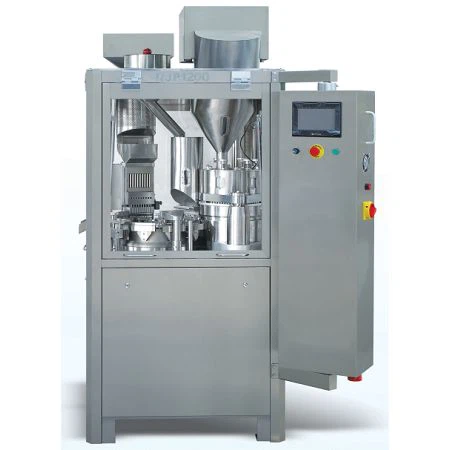
As a leading supplier of hard capsule filling machines, we offer a wide range of products to meet the diverse needs of our customers. Our Automatic Capsule Filling Machine is designed for high - volume production, with advanced detection and rejection systems to ensure the quality and safety of the capsules. It can handle a variety of capsule sizes and filling materials, making it suitable for different pharmaceutical and nutraceutical applications.
For small - scale production or laboratories, we also provide Small Capsule Filling Machines. These machines are compact and easy to operate, while still offering reliable detection and rejection capabilities. They are ideal for startups and research institutions that require a cost - effective solution for capsule filling.
In addition, our Dosator Capsule Filling Machine is known for its high precision and efficiency. It uses a dosator system to accurately measure and fill the capsules, and is equipped with state - of - the - art detection and rejection mechanisms to ensure the quality of the final product.
Contact Us for Purchase and Consultation
If you are in the market for a hard capsule filling machine, we invite you to contact us for more information. Our team of experts is ready to assist you in choosing the right machine for your specific needs. We can provide detailed product specifications, pricing information, and after - sales support. Whether you are a large pharmaceutical manufacturer or a small - scale producer, we have the perfect solution for you. Don't hesitate to reach out and start a discussion about your capsule filling requirements.
References
- Pharmaceutical Engineering Handbook.
- Journal of Pharmaceutical Sciences and Technology.
- International Journal of Nutraceuticals and Functional Foods.





