How to optimize the layout of a Blister Cartoner Production Line in a factory?
Leave a message

Hey there! I'm a supplier of Blister Cartoner Production Lines. Over the years, I've seen firsthand how a well - optimized production line can make a world of difference in a factory's efficiency and output. So, let's dive into how you can optimize the layout of a Blister Cartoner Production Line in your factory.
Understanding the Basics of a Blister Cartoner Production Line
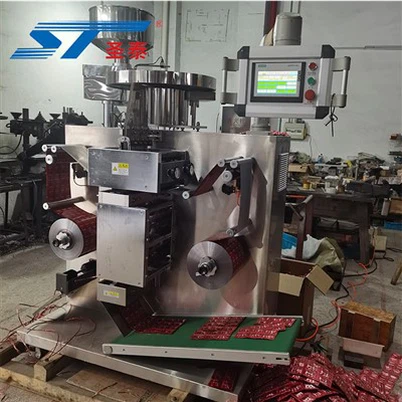
Before we start talking about optimization, let's quickly go over what a Blister Cartoner Production Line usually consists of. It typically includes machines like the Tablet Blister Packing Machine, the Blister Tablet Forming Sealing and Packaging Machine, and the Pill Blister Packing Machine. These machines work together to form blisters, fill them with products (like tablets or pills), seal them, and then pack them into cartons.
Analyzing Your Factory Space
The first step in optimizing your production line layout is to take a good look at your factory space. Measure the area where you plan to set up the production line. Consider factors like the ceiling height, the location of doors and windows, and any existing infrastructure such as columns or ventilation systems. You need to make sure there's enough room for the machines, as well as space for workers to move around safely and for material handling.
For example, if you have a long and narrow factory space, you might want to arrange the machines in a linear layout. This way, the products can flow smoothly from one machine to the next without any major detours. On the other hand, if your factory space is more square - shaped, you could consider a U - shaped or L - shaped layout. These layouts can save space and make it easier for workers to access different parts of the production line.
Considering the Workflow
The workflow of your production line is crucial. You want to arrange the machines in a way that minimizes the distance the products have to travel between each step. Start by identifying the sequence of operations. Usually, the blister forming comes first, followed by filling, sealing, and then cartoning.
Place the Blister Tablet Forming Sealing and Packaging Machine at the beginning of the line. Make sure it's close to the raw material storage area, such as the location where the plastic sheets for blister forming are stored. This reduces the time and effort required to transport the raw materials to the machine.
Next, position the filling machine right after the blister forming machine. This allows for a seamless transfer of the formed blisters to the filling station. The sealing machine should be adjacent to the filling machine, so the filled blisters can be quickly sealed. Finally, place the cartoning machine at the end of the line, where the sealed blisters can be efficiently packed into cartons.
Worker Safety and Comfort
Worker safety and comfort are non - negotiable. You need to ensure that there are clear walkways around the machines. The walkways should be wide enough to allow workers to move freely, even when carrying materials or tools. Also, make sure there's enough space for workers to perform maintenance tasks on the machines.
Provide proper lighting and ventilation in the area where the production line is located. Good lighting reduces the risk of accidents and helps workers perform their tasks more accurately. Adequate ventilation is important to remove any fumes or dust generated by the machines, which can be harmful to workers' health.
Material Handling
Efficient material handling is key to a well - optimized production line. Consider using conveyors to move the products between machines. Conveyors can save a lot of time and effort compared to manual handling. You can choose from different types of conveyors, such as belt conveyors, roller conveyors, or chain conveyors, depending on your specific needs.
Also, think about the storage of raw materials and finished products. Keep the raw materials close to the machines that use them, as mentioned earlier. For finished products, set up a storage area near the end of the production line. This makes it easy to load the products onto trucks for shipping.
Flexibility and Future Expansion
Your production line layout should be flexible enough to adapt to changes in production volume or product types. As your business grows, you might need to add more machines or change the production process. Design the layout in a way that allows for easy expansion.
For example, leave some extra space between the machines. This space can be used to install additional equipment in the future without having to completely rearrange the entire production line. Also, choose machines that are modular and can be easily integrated into the existing setup.
Maintenance and Accessibility
Regular maintenance is essential to keep your production line running smoothly. Make sure all parts of the machines are easily accessible for maintenance. This means leaving enough space around the machines for technicians to open panels, replace parts, and perform inspections.
Label all the important components of the machines clearly. This makes it easier for workers and technicians to identify and troubleshoot problems. You can also set up a maintenance schedule and keep records of all maintenance activities.
Cost - Benefit Analysis
When optimizing your production line layout, you need to consider the cost - benefit ratio. Some layout changes might require a significant investment, such as installing new conveyors or expanding the factory space. However, these changes can also lead to long - term savings in terms of increased efficiency, reduced labor costs, and fewer production delays.


Do a cost - benefit analysis before making any major changes. Calculate the upfront costs of the changes, including the cost of equipment, installation, and any necessary modifications to the factory. Then, estimate the potential savings over a certain period of time. If the benefits outweigh the costs, it's probably a good investment.
Training Your Workers
Once you've optimized the production line layout, it's important to train your workers. Make sure they understand the new layout and how it affects their work. Provide training on how to operate the machines safely and efficiently in the new setup.
Encourage workers to provide feedback on the new layout. They might have some valuable insights based on their daily experience. You can use their feedback to make further improvements to the layout.
Conclusion
Optimizing the layout of a Blister Cartoner Production Line in a factory is a complex but rewarding process. By analyzing your factory space, considering the workflow, prioritizing worker safety and comfort, and planning for flexibility and future expansion, you can create a more efficient and productive production line.
If you're interested in improving your Blister Cartoner Production Line or need more advice on layout optimization, don't hesitate to reach out for a chat. We can discuss your specific needs and come up with a customized solution for your factory.
References
- Lean Manufacturing Principles: A Guide to Improving Production Efficiency
- Industrial Engineering Handbook: Layout Design and Optimization
- Best Practices in Pharmaceutical Packaging Production