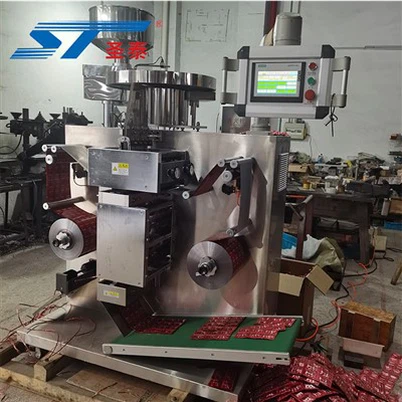
How to train the operators of a Tropical Blister Packing Machine?
Leave a message

Training operators for a Tropical Blister Packing Machine is a crucial process that directly impacts the efficiency, quality, and safety of the packaging operations. As a supplier of Tropical Blister Packing Machines, I understand the significance of providing comprehensive training to ensure that operators can maximize the potential of our equipment. In this blog, I will share some effective strategies and steps to train operators for a Tropical Blister Packing Machine.
Pre - training Preparation
Before starting the actual training, it is essential to assess the operators' existing knowledge and skills. Conduct a pre - training assessment to determine their familiarity with blister packing concepts, basic machinery operations, and safety procedures. This will help in tailoring the training program to meet their specific needs.
Provide the operators with training materials in advance. These materials can include user manuals, safety guides, and technical specifications of the Tropical Blister Packing Machine. Familiarizing them with these resources beforehand will enable them to have a basic understanding of the machine's components, functions, and operating principles.
Introduction to the Tropical Blister Packing Machine
Begin the training with an in - depth introduction to the Tropical Blister Packing Machine. Explain its overall structure, including the forming station, filling station, sealing station, and cutting station. Point out the key components such as the heating elements, rollers, and sensors, and describe their functions.
Show the operators the different types of blister packs that the machine can produce. This can include ALU ALU Blister Packaging Machine, Flat Plate Automatic Blister Packing Machine, and Powder Blister Packaging Machine. Discuss the applications and advantages of each type of blister pack, which will give the operators a broader perspective on the machine's capabilities.
Safety Training
Safety should always be the top priority during the training process. Teach the operators about the potential hazards associated with the Tropical Blister Packing Machine, such as hot surfaces, moving parts, and electrical risks. Provide them with personal protective equipment (PPE) like gloves, safety glasses, and earplugs, and demonstrate how to wear them correctly.
Go through the safety features of the machine, such as emergency stop buttons, safety guards, and interlocks. Train the operators on how to use these safety features effectively in case of an emergency. Emphasize the importance of following safety procedures at all times, including regular maintenance checks and proper handling of the machine.
Machine Operation Training
- Power - on and Initial Setup
- Demonstrate how to power on the Tropical Blister Packing Machine correctly. Explain the sequence of operations, including turning on the main power switch, the control panel, and any auxiliary equipment.
- Guide the operators through the initial setup process, such as setting the temperature, pressure, and speed parameters according to the type of blister pack and the product being packaged. Show them how to use the control panel to input and adjust these parameters accurately.
- Forming Process
- Explain the principle of the forming process in the Tropical Blister Packing Machine. The plastic film is heated and then formed into blister cavities using a mold. Demonstrate how to load the plastic film onto the machine and adjust the film tension.
- Train the operators to monitor the forming quality, such as the shape, size, and thickness of the blister cavities. Teach them how to troubleshoot common forming problems, such as uneven heating or improper mold alignment.
- Filling Process
- Show the operators how to load the products into the blister cavities. Depending on the type of product, it could be tablets, capsules, or powders. Explain the importance of accurate filling to ensure the correct dosage and product integrity.
- Train them on how to adjust the filling mechanism, such as the filling volume and speed. Demonstrate how to clean and maintain the filling equipment to prevent contamination and blockages.
- Sealing Process
- Describe the sealing process, where the lidding film is bonded to the formed blister cavities. Explain the factors that affect the sealing quality, such as temperature, pressure, and sealing time.
- Teach the operators how to set the sealing parameters correctly and how to check the sealing strength and appearance. Show them how to identify and solve sealing problems, such as poor adhesion or leakage.
- Cutting Process
- Demonstrate the cutting process, where the connected blister packs are separated into individual units. Explain the operation of the cutting tool and how to adjust the cutting position and depth.
- Train the operators to inspect the cut edges of the blister packs for smoothness and accuracy. Teach them how to replace the cutting blade when it becomes dull.
Maintenance and Troubleshooting Training
- Regular Maintenance
- Provide the operators with a maintenance schedule for the Tropical Blister Packing Machine. Teach them how to perform routine maintenance tasks, such as cleaning the machine, lubricating the moving parts, and checking the electrical connections.
- Explain the importance of regular maintenance in prolonging the machine's lifespan and ensuring its stable operation. Show them how to keep maintenance records for future reference.
- Troubleshooting
- Train the operators to identify common problems that may occur during the operation of the Tropical Blister Packing Machine, such as machine jams, sensor malfunctions, or abnormal noise.
- Provide them with a troubleshooting guide that includes step - by - step instructions on how to diagnose and solve these problems. Encourage them to report any issues promptly and seek professional help if necessary.
Hands - on Practice and Evaluation
After the theoretical training, provide the operators with sufficient hands - on practice time. Let them operate the Tropical Blister Packing Machine under the supervision of experienced trainers. This will allow them to apply the knowledge they have learned and gain practical skills.
During the hands - on practice, observe the operators' performance closely. Provide them with immediate feedback on their operations, highlighting both their strengths and areas that need improvement. Conduct regular evaluations to assess their progress and ensure that they have mastered the necessary skills.
Continuous Learning and Support
Training is not a one - time event. Encourage the operators to engage in continuous learning. Provide them with updated training materials and resources as the machine technology evolves or new packaging requirements emerge.
Establish a support system for the operators. They should be able to contact our technical support team if they encounter any problems during the operation of the Tropical Blister Packing Machine. Our support team can provide remote assistance or on - site service if needed.


Conclusion
Training operators for a Tropical Blister Packing Machine is a comprehensive process that requires careful planning and execution. By providing a well - structured training program that covers machine introduction, safety, operation, maintenance, and troubleshooting, operators can become proficient in operating the machine effectively and safely.
If you are interested in our Tropical Blister Packing Machines or need more information about our training services, please feel free to contact us for procurement and further discussions. We are committed to providing you with high - quality equipment and excellent training support to meet your packaging needs.
References
- Manufacturer's user manual for Tropical Blister Packing Machine
- Industry standards and guidelines for blister packing operations
- Safety regulations related to machinery operation in the packaging industry