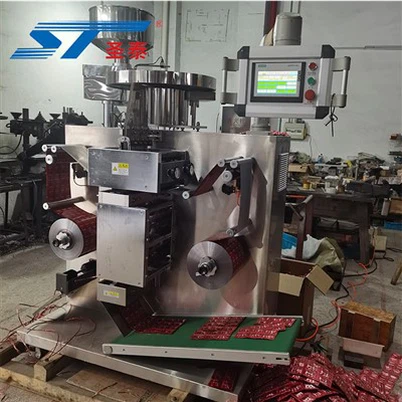
What is the heat - transfer efficiency of a Pill Blister Packaging Machine's heating system?
Leave a message

Hey there! As a supplier of Pill Blister Packaging Machines, I often get asked about the heat - transfer efficiency of our machines' heating systems. It's a crucial factor that can significantly impact the quality and productivity of the blister packaging process. So, let's dive right in and explore what heat - transfer efficiency in a Pill Blister Packaging Machine's heating system really means.
What is Heat - Transfer Efficiency?
Heat - transfer efficiency refers to how effectively a heating system can transfer heat from the heat source to the packaging materials. In the case of a Pill Blister Packaging Machine, we're mainly talking about heating the plastic films (like PVC, PVDC, etc.) to form the blisters where the pills will be placed.


A high - efficiency heating system ensures that the right amount of heat is transferred to the film in the shortest possible time. This is important because if the heat transfer is too slow, it can slow down the entire packaging process, reducing productivity. On the other hand, if the heat transfer is uneven or too fast, it can lead to poor - quality blisters. For example, the blisters might not form properly, or the seals might be weak, which can compromise the integrity of the packaged pills.
Factors Affecting Heat - Transfer Efficiency
There are several factors that can influence the heat - transfer efficiency of a Pill Blister Packaging Machine's heating system.
1. Heating Element Design
The design of the heating element plays a huge role. We use different types of heating elements in our machines, such as ceramic heaters and infrared heaters. Ceramic heaters are known for their high - temperature stability and relatively fast heat - up time. They can evenly distribute heat across the surface of the film, which is great for forming consistent blisters. Infrared heaters, on the other hand, can transfer heat directly to the film without heating the surrounding air too much. This can be more energy - efficient and can also heat the film more quickly.
2. Heat - Transfer Medium
The medium through which heat is transferred is also important. In some machines, hot air is used as the heat - transfer medium. Hot air can be blown over the film to heat it up. However, this method might not be as efficient as direct contact heating because a lot of heat can be lost to the surrounding environment. In our machines, we often use direct contact heating methods, where the heating element is in direct contact with the film. This allows for more efficient heat transfer.
3. Machine Speed
The speed at which the Pill Blister Packaging Machine operates can affect heat - transfer efficiency. If the machine is running too fast, the heating system might not have enough time to transfer sufficient heat to the film. This can result in incomplete blister formation. So, it's important to find the right balance between machine speed and heat - transfer time.
4. Packaging Material Properties
Different packaging materials have different heat - transfer characteristics. For example, PVC has a different melting point and heat - absorption rate compared to PVDC. Our machines are designed to be adjustable to accommodate various packaging materials. We can adjust the temperature and heating time based on the specific properties of the material being used.
Measuring Heat - Transfer Efficiency
Measuring heat - transfer efficiency can be a bit tricky. One common way is to measure the temperature of the film at different points during the heating process. We can use thermocouples or infrared thermometers to do this. By comparing the initial and final temperatures of the film, as well as the time it takes to reach the desired temperature, we can calculate the heat - transfer efficiency.
Another way is to evaluate the quality of the formed blisters. If the blisters are well - formed, with strong seals and consistent shapes, it's a good indication that the heat - transfer efficiency is high. We also look at the productivity of the machine. A machine with high heat - transfer efficiency should be able to produce a large number of high - quality blisters in a short period of time.
Improving Heat - Transfer Efficiency in Our Machines
At our company, we're constantly working on improving the heat - transfer efficiency of our Pill Blister Packaging Machines.
1. Advanced Heating Technologies
We're always researching and implementing new heating technologies. For example, we're looking into using more advanced ceramic heaters with better heat - distribution properties. We're also exploring the use of hybrid heating systems that combine the advantages of different heating methods to achieve even more efficient heat transfer.
2. Machine Optimization
We optimize the design of our machines to reduce heat loss. This includes using better insulation materials around the heating system to prevent heat from escaping. We also ensure that the heating elements are positioned in the most efficient way possible to maximize heat transfer to the film.
3. Customization
We understand that different customers have different requirements. So, we offer customized solutions for our Pill Blister Packaging Machines. We can adjust the heating system based on the specific packaging materials and production speeds that our customers need. This way, we can ensure that each machine provides the highest possible heat - transfer efficiency for the customer's particular application.
Our Range of Blister Packaging Machines
We offer a wide range of blister packaging machines, each designed to meet different needs. For example, our ALU ALU Blister Packaging Machine is great for packaging pills in aluminum - to - aluminum blisters. It has a highly efficient heating system that can quickly and evenly heat the aluminum foils to form strong seals.
Our Blister Packing Machine for Vial is specifically designed for packaging vials. It uses advanced heating technology to ensure that the blisters are formed properly around the vials, providing a secure and protective packaging solution.
And our Pvc - paper Blister Packing Machine is ideal for packaging pills in PVC - paper blisters. It can adjust the heat - transfer process according to the different properties of PVC and paper, ensuring high - quality blister formation.
Conclusion
In conclusion, the heat - transfer efficiency of a Pill Blister Packaging Machine's heating system is a critical factor that affects both the quality and productivity of the packaging process. By understanding the factors that influence heat - transfer efficiency and implementing advanced technologies and optimization methods, we can provide our customers with machines that offer high - performance and reliable blister packaging solutions.
If you're in the market for a Pill Blister Packaging Machine or want to learn more about how our machines can meet your specific needs, don't hesitate to get in touch with us. We're here to help you make the best choice for your packaging requirements.
References
- "Principles of Heat Transfer" by Frank P. Incropera and David P. DeWitt
- "Packaging Technology Handbook" by John A. Robertson