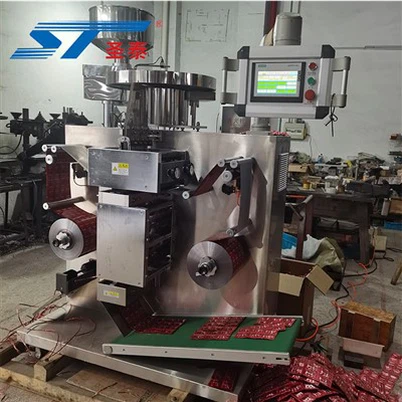
What is the feeding system of a Manual Blister Packing Machine like?
Leave a message

As a supplier of Manual Blister Packing Machines, I am often asked about the feeding system of these machines. In this blog post, I will delve into the details of the feeding system of a Manual Blister Packing Machine, explaining its components, operation, and advantages.
Components of the Feeding System
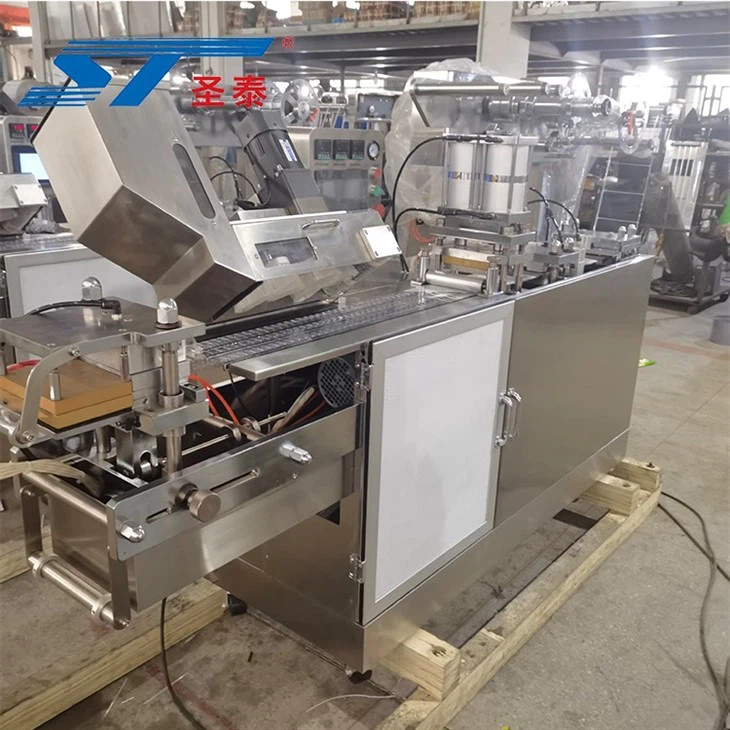
The feeding system of a Manual Blister Packing Machine is a crucial part of the overall packaging process. It is responsible for accurately placing the products into the blister cavities before the sealing process. The main components of the feeding system include:
Product Hopper
The product hopper is where the products to be packed are stored. It is designed to hold a sufficient quantity of products to ensure continuous operation. The hopper is typically made of stainless steel or other food-grade materials to ensure product safety.
Feeding Tray
The feeding tray is located below the product hopper. It receives the products from the hopper and distributes them evenly into the blister cavities. The feeding tray is usually equipped with a vibrating mechanism to ensure smooth and uniform product flow.
Guide Rails
Guide rails are used to direct the products from the feeding tray into the blister cavities. They are designed to ensure that the products are accurately placed in the correct position. The guide rails can be adjusted to accommodate different product sizes and shapes.
Pusher Mechanism
The pusher mechanism is responsible for pushing the products from the feeding tray into the blister cavities. It is usually operated manually or by a simple mechanical device. The pusher mechanism ensures that the products are firmly seated in the blister cavities.
Operation of the Feeding System
The operation of the feeding system of a Manual Blister Packing Machine is relatively simple. Here is a step-by-step overview of the process:
-
Loading the Products
The products to be packed are loaded into the product hopper. The hopper should be filled to an appropriate level to ensure continuous operation. -
Vibrating the Feeding Tray
The vibrating mechanism of the feeding tray is activated to ensure smooth and uniform product flow. The vibration helps to prevent the products from clogging and ensures that they are evenly distributed on the feeding tray. -
Adjusting the Guide Rails
The guide rails are adjusted to accommodate the size and shape of the products. This ensures that the products are accurately placed in the correct position. -
Pushing the Products into the Blister Cavities
The pusher mechanism is used to push the products from the feeding tray into the blister cavities. The operator manually operates the pusher mechanism or uses a simple mechanical device to perform this task. -
Inspecting the Product Placement
After the products have been pushed into the blister cavities, the operator should inspect the product placement to ensure that they are accurately placed in the correct position. Any misaligned products should be corrected manually.
Advantages of the Feeding System
The feeding system of a Manual Blister Packing Machine offers several advantages, including:
Cost-Effective
Manual Blister Packing Machines are generally more cost-effective than their automatic counterparts. The feeding system of a manual machine is relatively simple and does not require complex automation, which reduces the overall cost of the machine.

Flexibility
The feeding system of a Manual Blister Packing Machine is highly flexible. It can be easily adjusted to accommodate different product sizes and shapes. This makes it suitable for small to medium-scale production where product variety is high.
Easy to Operate
Manual Blister Packing Machines are easy to operate. The feeding system does not require extensive training or technical knowledge. This makes it suitable for small businesses or startups with limited resources.
Low Maintenance
The feeding system of a Manual Blister Packing Machine is relatively simple and has few moving parts. This reduces the maintenance requirements and costs associated with the machine.
Comparison with Automatic Feeding Systems
While the feeding system of a Manual Blister Packing Machine offers several advantages, it also has some limitations compared to automatic feeding systems. Here is a comparison between the two:
Speed
Automatic feeding systems are generally faster than manual feeding systems. They can handle a higher volume of products per minute, making them suitable for large-scale production.
Accuracy
Automatic feeding systems are more accurate than manual feeding systems. They use advanced sensors and control systems to ensure that the products are accurately placed in the correct position. This reduces the risk of product misplacement and improves the overall packaging quality.
Automation
Automatic feeding systems are fully automated, which reduces the need for manual labor. This can improve productivity and reduce labor costs in the long run.
However, it is important to note that automatic feeding systems are more expensive and require more technical expertise to operate and maintain. They are also less flexible than manual feeding systems and may not be suitable for small to medium-scale production with high product variety.
Related Products
If you are interested in exploring other types of blister packing machines, we also offer Automatic Blister Packaging Machine, Pill Blister Packaging Machine, and Blister Tablet Forming Sealing and Packing Machine. These machines offer advanced features and higher levels of automation to meet the needs of different industries.
Conclusion
The feeding system of a Manual Blister Packing Machine is a simple yet effective solution for small to medium-scale production. It offers several advantages, including cost-effectiveness, flexibility, and ease of operation. While it may not be as fast or accurate as automatic feeding systems, it is a suitable option for businesses with limited resources and high product variety.
If you are interested in learning more about our Manual Blister Packing Machines or other related products, please feel free to contact us for a detailed discussion and procurement negotiation. We are committed to providing high-quality products and excellent customer service.
References
- Smith, J. (2020). Introduction to Blister Packing Machines. Packaging Technology Journal, 15(2), 34-42.
- Johnson, A. (2019). Feeding Systems in Blister Packing Machines. Industrial Engineering Review, 22(3), 56-63.
- Brown, C. (2018). Comparison of Manual and Automatic Blister Packing Machines. Manufacturing Innovation, 10(4), 78-85.